
When it comes to chef’s knives, you don’t need an entire set, you just need the one that does it all. Enter Wüsthof knives, built for both commercial kitchens and home cooks. These German-made blades are known for their sharpness, balance, and durability.
Today, we put together the popular Wüsthof Classic 8-inch Chef’s Knife through daily use. With slicing, dicing, and handling prep jobs, let’s see if it lives up to its reputation.
We’ll break down the Wüsthof knives review and see what works, what doesn’t, and whether it’s worth the price for your kitchen.
About Wüsthof: Brand & knife specs at a glance
Founded in 1814 in Solingen, Germany, famously known as the “city of blades,” Wüsthof has been designing premium knives since then. Their classic series, in particular, is a favorite for its special blades, balanced feel, and lasting sharpness.
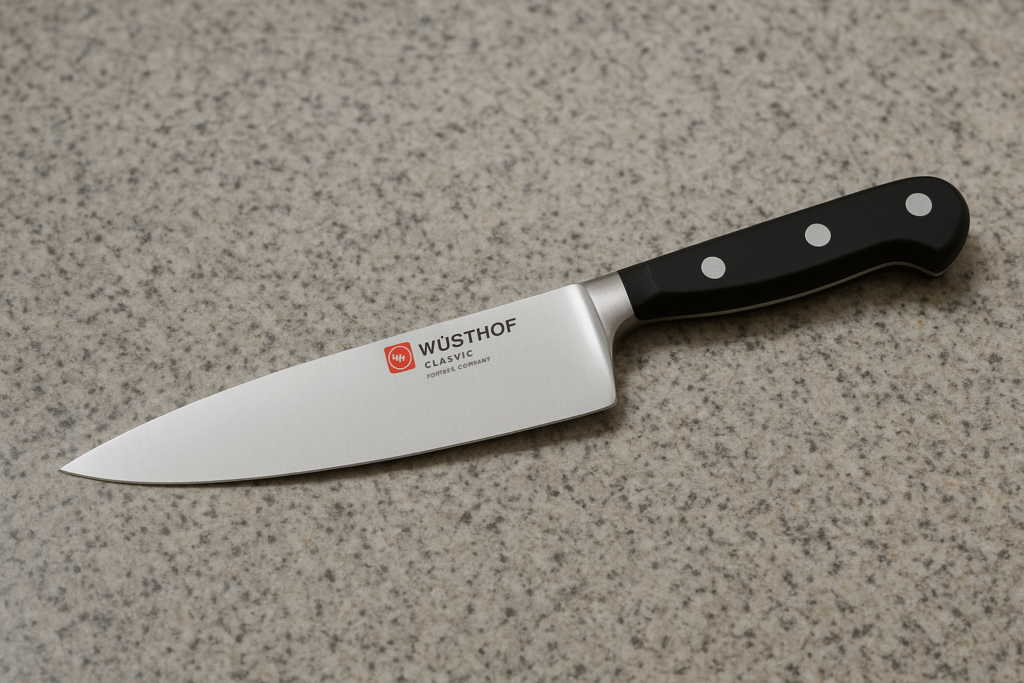
Knife specifications, Wüsthof Classic Chef’s Knife Review:
● Blade material: High carbon stainless steel
● Rockwell hardness: 58° HRC
● Blade Edge: PEtec (Precision Edge technology) for long-lasting sharpness
● Edge angle: 14° per side (Westend double bevel)
● Handle material: Full tang with triple-riveted synthetic polyoxymethylene (POM) handle
● Blade length: 8 inches
● Weight: Approx. 8.5 ounces
● Country of origin: Solingen, Germany
What makes Wüsthof knives stand out
Wüsthof knives consistently earn top marks for their balance of tradition, performance, and durability.
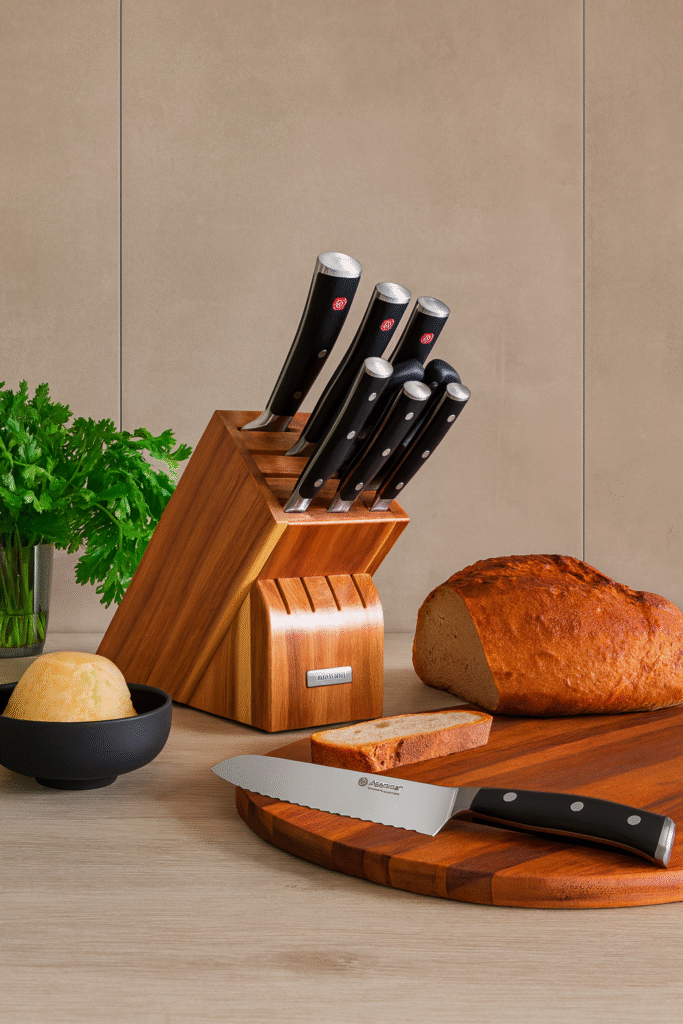
Let’s review Wüsthof knives and see what makes them the go-to for both seasoned chefs and kitchen hobbyists:
1. Exceptional sharpness
With Wüsthof’s PEtec (Precision Edge Technology), these knives are 20% sharper than standard blades and hold their edge longer. The 14° per side edge angle allows for smooth, clean cuts, from paper-thin tomatoes to dense cuts of meat.
2. Precision built
Each knife is made from a single block of high-carbon stainless steel. This not only boosts durability but also ensures balanced weight distribution from heel to tip.
3. Impressive edge retention
Many culinary pros praise Wüsthof’s edge retention, noting how rarely it needs re-sharpening compared to others with the same price. It can stay razor sharp through weeks of daily use in both home and commercial settings.
4. Comfortable and balanced feel
The triple-riveted, easy-to-use handle paired with a full zing design gives these knives a secure, balanced grip, even during long prep sessions. Many chefs mention how naturally it fits in the hand, reducing tiredness.
5. Versatility across models
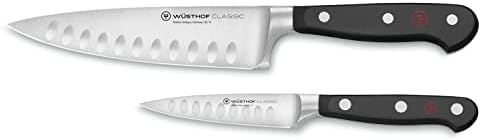
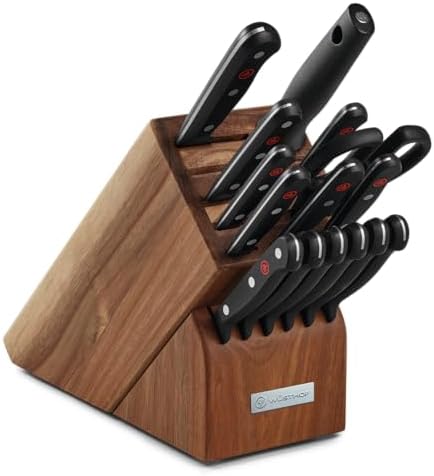
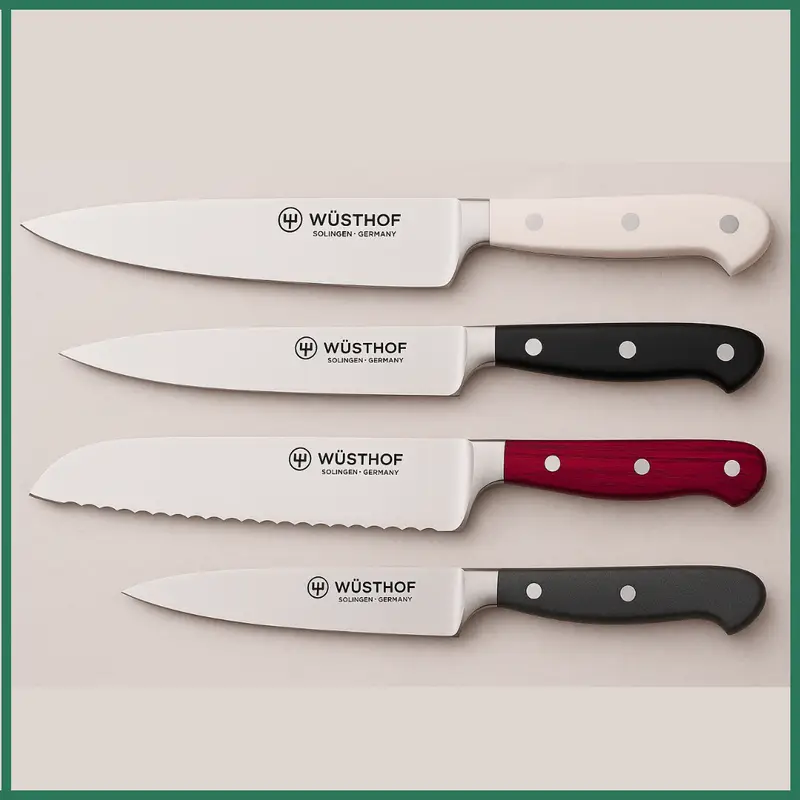
While the classic chef’s knife is the flagship, Wüsthof offers a broad range of specialized blades and sizes. You can make a kit suited for everything from delicate herb chopping to heavy butchering.

Where Wüsthof knives fall short
There’s no doubt about Wüsthof knives’ great quality and performance. However, there can be a few downsides to consider before investing:
1. Premium price tag
Wüsthof knives, especially with their classic series, belong to the higher end of the mid-premium market. Some home cooks might find more budget-friendly options that perform just as well at a lesser price.
2. Heavyweight
Wüsthof’s forged knives are a little heavier than lightweight Japanese knives or stamped blades. While this brings stability for chopping and butchering, it can feel overwhelming during long prep sessions, especially for beginners.
3. Regular honing needed
Even though they have excellent edge retention, these knives benefit from regular honing to maintain their sharp edge. Skipping this step could lead to a duller blade.
4. Not ideal for delicate work
The thicker, heavier German blade is perfect for durability and power but might feel a bit bulky for ultra-fine, complex slicing tasks like sashimi or paper-thin herbs.
Is it worth the price? (value vs. alternatives)
Wüsthof knives don’t come cheap, and if you have one, you know the classic 8-inch chef’s knife typically ranges between $120 and $200. This place is in the premium commercial category. But the question is, is it worth shelling out that kind of money?
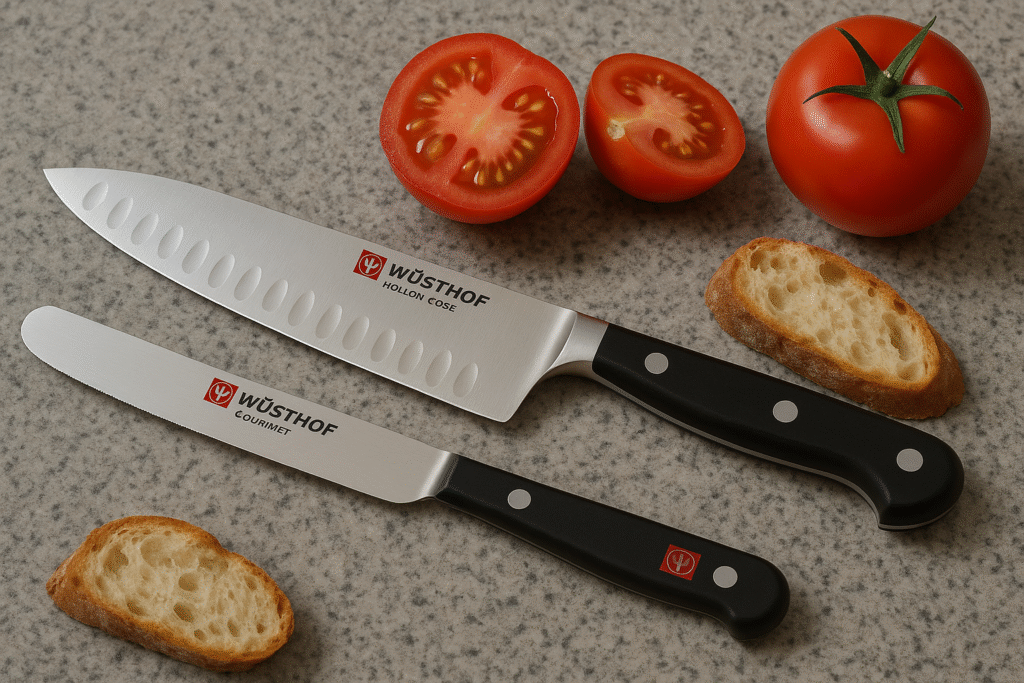
If durability, balance, and German steel heritage matter to you, then yes, this one is a must-buy. It’s a true work of art for both home kitchens and commercial settings.
Just to be on the safer side, let’s see how it compares to other similar options:
1. Shun Classic (Japanese)
Shun knives are known for their lighter weight, thinner VG Max blades, and razor-sharp edges. They work better in complex slicing and prep but need more care, as they are prone to chipping.
2. Global G-2
Lightweight, sleek, and fully stainless steel, the Global G-2 offers excellent sharpness and a modern aesthetic. Though it lacks the bulkiness and classic feel of a Wüsthof, it is great for cooks who prefer a handy, minimalist tool.
3. Misono UX10
A Japanese-made favorite among professionals, the UX10 offers great sharpness and edge retention. It’s actually lighter than Wüsthof and excels at light work, though it demands more maintenance and a gentler touch.
Final verdict: who should buy it?
Here’s something many people overlook about Wüsthof knives during it’s review, and many people don’t even know it. These knives hold their resale value well. High-quality knives like Wüsthof Classic tend to stay in demand among culinary students, collectors, and home chefs upgrading their kit.
So, if you’re still on the fence, think of it as more of an investment that you can pass down, trade, or resell later without losing much value. That’s not something you get with every knife, and it makes owning a Wüsthof just a little smarter.



FAQs
Why are Wüsthof knives so expensive?
Wüsthof knives are handcrafted in Solingen, Germany, using high-carbon stainless steel and quality forging. The brand has a solid reputation for durability, balanced weight, and razor-sharp edges that add to its premium price.
Do professional chefs use Wüsthof knives?
Yes, many professional chefs use and rely on Wüsthof, especially the Classic and Ikon series. Their durability, comfortable handles, and edge retention make them a must-have in both commercial and culinary schools.
What’s the difference between Wüsthof Classic and Wüsthof Ikon?
The main difference between the two is the handle design and balance. The Classic series has a traditional triple-riveted handle and full bolster for safety, while the Ikon series offers a sleeker, curvier handle and a half bolster for easier sharpening and a lighter feel.
How long do Wüsthof knives typically last?
It all depends on how much care and regular honing it gets. With proper care, constant honing, and occasional professional sharpening, a Wüsthof knife can easily last for years.
Leave a Reply